Showing posts with label Mexican customs. Show all posts

Thursday, October 26, 2017

Mexico's Public Markets: World of Colors, Aromas, Sounds, Tastes — and Community!

La Jornada: Ángeles González Gamio

Walking through a Mexican market is one of the richest cultural and sensual experiences you can have. Dating back to pre-Hispanic times, they persist even today, despite the onslaught of supermarkets. There is a marked difference in the quality and offering between public markets and the supermarkets.

Mercado San Juan Pugibet
Centro West
Supermarkets offer only one quality of pumpkin, onion, apples, peppers, tomatoes and other products of the earth. If they are ugly, you put up with it, since that's all there is. But the supers make up for it by offering 20 different types of deodorant and, if they are lucky, even some gringo brands, which are the same as the ones here but cost twice as much—and, yes!—the labels are in English.

Supermarkets never offer the rich variety of products found only in the markets. Besides fruits, vegetables and all kinds of food, there are piñatas, crafts, flowers, medicinal herbs, clothing and pretty much anything else that comes to mind. Eating in one of the fonditas [lunch counters] guarantees tasty, economical dishes with the freshest ingredients.


Markets have been an essential part of life in Mexico City, although the growth of markets hasn't kept pace with the capital's steady growth. In recent decades, they stopped building public markets even as a thousand facilities for large supermarket chains were constructed.

The disappearance of public markets has resulted not only in the loss of many job opportunities but of the warm, personal treatment provided by the sellers—not to mention the richness of having several options of the same produce! The markets are places of community, of socialization—where networks are woven of kinship and cronyism that create a strong communal solidarity.

"Fondita" 

Fresh chicken breasts
Now we are seeing emergence of a hope that the market decline might be reversed. A few days ago [August 2016], a declaration was signed naming as an intangible cultural heritage these traditional expressions that take place in Mexico City's public markets.

One important aspect is that the markets are recognized not only as supply centers, but as custodians of traditions. Suffice it to recall Christmas. Where would we buy everything needed for that celebration? Figurines for the Nativity scene, hay, moss, poinsettias, corn husks for tamales, brown sugar and fruit for the punch served at the posadas and, of course, the piñatas, to mention just a few of the many products not found in the supermarkets.
See: Mexican Traditions: Las Posadas
It was announced that in 2017 the budget will be tripled in order to rescue the 329 traditional and specialized public markets found in Mexico City's 16 boroughs. The public markets employ 280,000 people, who annually hold more than 1,300 romerías [open-air festivities celebrating a religious event]. This means that every day there are at least three anniversary festivities in the markets of Mexico's capital city.

The declaration regards these public spaces as living and dynamic entities, with an ancient tradition fostering the development of Mexican culture by being the supply channel for 46 percent of Mexico City households.

Eduardo Vázquez, Mexico City's Secretary of Culture, explained that the declaration basically grants to the public markets an active role in the development of the social fabric by integrating and reflecting the ethnic, social and cultural diversity that has built Mexico City.

They are going to dedicate 200 million pesos [11 million USD] for the preservation of public markets; however, given the [deteriorated] state of many markets, a much larger amount is surely going to be needed in the near future.

Take the Merced Market, which some time ago suffered a fire that affected part of the nave, which measures the impressive length of 400 meters [437 yards] with 3,205 puestos [sellers' stalls]. Then there is the smaller nave, which sells meat and poultry and has an annex for meals. Around the outside is the pavilion for popular toys and such typical items as clothing, flowers and candy ...

A world of colors, aromas, sounds and tastes that awaken all the senses. In his memoirs, Chilean poet Pablo Neruda declared:
"Mexico is in the markets."
Spanish original

Related articles:

Tuesday, December 22, 2015

Mexico-United States Christmas Tale: From Nochebuena—"Christmas Eve" Flower—to Poinsettia

Photo: Notimex
Excelsior/Notimex
With added information from Mexico Voices

The Nochebuena [literally, "Good Night"], "Christmas Eve" flower, or poinsettia (Euphorbia pulcherrima) is native to Mexico.  This shrub, capable of growing up to fifteen feet tall (!), can be found in tropical deciduous forests in moderate elevations along Mexico's Pacific Coast south to Guatemala and in some hot, seasonally dry forests in the country's interior.

With its dark green, serrated leaves and upper leaves of red, yellow or marbled with white, the Nochebuena-Poinsettia has become one of the most ubiquitous symbols of Christmas. In various parts of the world it is known as Christmas Star.


The shrubs can grow to 15'
Photo: Mexico Voices
It has a pre-Hispanic heritage. The Náhuatl name is cuetlaxochitl [kuet-la-sóch-itl], which means "leather flower". The Aztecs used the plant in rituals as a symbol of purity and new life for warriors, and they made offerings of it to the Sun to renew its strength.

In colonial times, because of its appearance at Christmastime, the Spanish named the plant "Nochebuena", the Spanish name for Christmas Eve. Beginning in the seventeenth century, the plant became a symbol of the holidays.

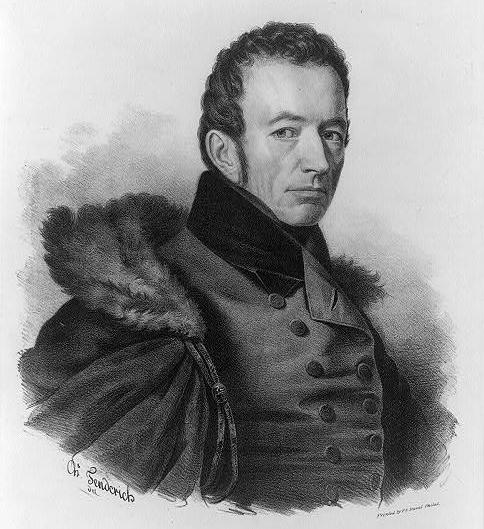
The tradition of decorating homes with Nochebuena comes from the U.S. In 1828, Joel Robert Poinsett, the first U.S. minister to Mexico, who was also a physician and amateur botanist, was impressed by its beauty and sent a few plants home.

JRP-SoW, S.jpg
Joel Robert Poinsett
Wikipedia 
But it was not until 1909, that the family of Albert Ecke began to cultivate the plant commercially in California, undertaking its controlled breeding and production. The family patented the flower under the name poinsettia. They produced plants of various colors and foliage, each of which they patented, thus controlling a virtual market monopoly into the 1990s.

In Mexico, the Aztecs used parts of the flower to create reddish purple dye for textiles and for medicine. According to the Atlas of Mexican Plants for Traditional Medicine of the National Autonomous University of Mexico (UNAM), it has many medicinal uses related to skin disorders, female ailments and inflammatory processes.

According to information from the Secretariat of Agriculture, Livestock, Rural Development, Fisheries and Food (SAGARPA), Mexico ranks fourth worldwide in cultivated area, and at least 300 hectares [741 acres] are dedicated to growing potted poinsettia plants. The main states where it is cultivated are Morelos, Michoacán, Mexico City, Puebla, State of Mexico, Jalisco, Veracruz, Querétaro, Guanajuato, Chiapas and Guerrero... Spanish original

Other Christmas posts:

Wednesday, March 26, 2014

On the Flanks of Ajusco Volcano: Fiesta, Family and Much More

The response of Jenny's readers to the recent post about buying embroidered cushion covers from Chiapas was delightful, but it also aroused no little angst: How on earth was I to come up with another tale so grounded in our everyday experience of interacting with Mexico's ordinary people?

Oh, me of little faith! To my astonishment, another remarkable story has unfolded over the last couple of weeks. It all started as I was standing in line at Santander Bank waiting to make a deposit. Suddenly behind me, I heard a distinctly Mexican voice tentatively ask, "Señora Jenny?"

I turned to see a tall Mexican man smiling at me:
"Excuse me," I said, "I don't remember you. How do I know you?"
He told me that in early January he had driven me back from Médica Sur. Then I remembered!
"¡Qué milagro!" — "What a miracle!" I exclaimed, and I meant it.
The truth is I'd been trying to find him for the last couple of weeks. Ever since our visit to Tepoztlán, we've wanted to visit Ajusco Volcano, which is the mountain range separating the Valley of Tepoztlán from the Valley of Mexico [Mexico City], but I couldn't find the card given to me by the taxi driver who'd told me he lives there.

Later, he'd tell me that it was the first time he'd been in that bank. Walking by with his wife, he decided he could get his banking business done in that branch ... on that day. What's equally weird is that Santander isn't my bank either. I was only there to make a deposit in payment for a purchase!

Yes, he was indeed the driver of the taxi I'd hailed on my way back from a doctor's appointment. The way back to Coyoacán features a dramatic view of Ajusco, which rises improbably behind Mexico City's sprawling modernity.

On a Clear Day You Can See Ajusco Volcano, Southeast Mexico City
Photo: Jenny, leaning out of bedroom window and twisting left, south

In that first encounter, I remember remarking to the driver how beautiful and dramatic Ajusco is.
"We live there, on the side of Ajusco," he'd replied.
"You're kidding," was my delighted reaction. "My husband and I want to visit, but we need a guide. It's not somewhere to be visited without someone who knows the area." 
"I would be delighted to drive you. I'd like you to meet my wife, she's involved with tourist activities," he instantly replied.
That's how it started. When we arrived at our building, the driver gave me his card, which I somehow managed to misplace; hence, my two-week search trying to locate him now, three months later.

After I made my bank deposit, I waited. Writing on the bank's counter, I got his name, Carlitos, and telephone numbers: both cell phone and house line. When we got outside, I met his wife, a lovely woman who seemed slightly baffled, but friendly.

All through the week, I kept checking the weather, which through Saturday was monotonously the same: Clear with 10% Chance of Rain. Sunday's forecast was also stubbornly consistent: Cloudy with 30% Chance of Rain. No matter how many times I checked, the forecast stayed the same.

Finally, Reed and I just kind of looked at each other and said, "Let's go anyway." So I called Carlitos, and we arranged for him to pick us up at 11:00 AM Sunday morning.

Sunday: Cerro de Ajusco

Sunday morning dawned clear. Just a little after 11:00 AM, Carlitos arrived with his wife, Maristel. After a brief discussion to agree on the best route, we set out. By the time we arrived at the first lookout, haze had settled over the Valley of Mexico.

But if haze stopped Reed from taking photos, it couldn't mask the drama of the panorama. Urban sprawl and modern skyscrapers faded to the background, as I was once again struck by the bare bones of the geography of 'the' Valley of Mexico. Later I discovered that the Cuenca de México, catchment area for the chains of cerros, hills, that surround and define this basin is actually comprised of four valleys.

Before the Spanish arrived, the area was a system of lakes, which the Spanish filled in and drained during the first two hundred years of the Colonial Era. But what caught my eye were the extinct craters of volcanoes that had erupted hundreds if not thousands of years ago. Mother Nature at work!

I found this map of the Cuenca de México, the catchment area or drainage basin, that is Mexico City today.

Legend (Click to Enlarge)
Dark Green: Cuenca, Drainage Basin or Catchment, of Mexico City
Brown Triangles: Principal Mountains [At edge (periphery) of Catchment Area]
Turquoise Blue: Lakes Existing in 21st Century
Gray-Green: Lakes in the 16th Century [When Spanish Arrived]
Brown-Red Circles: Principal Population Areas
Yellow: Metropolitan Area of Mexico City

Getting back in the car, we began the climb up the side of Ajusco along its only road—a modest two-lane road that passes through three pueblos, each with its own small parish church.

Fiesta in Pueblo of Santa María Magdalena Petlacalco

At the second pueblo, we were in luck. It was their Fiesta associated with the First Friday of Lent. Located on a rise, the church was built during the first third of the 18th century. The Fiesta is in honor of The Lord of the Column (Señor de la Columna).

According to legend, the carved wooden statue of El Señor de la Columna was found by a peasant early one October morning on the shore of the Pacific Ocean in Lurín, Peru (Photo: Internet). 

Much of the Fiesta takes place in the Atrium, a large square in front of the Church. Small as this pueblo is, its Fiesta has all the traditional elements and conveys the intense energy of these liturgical celebrations. Here's my loose translation of the schedule:
  • First Friday: The fiesta begins with a traditional pilgrimage to the Sanctuary of the Señor de Chalma (outside Toluca), another miraculous manifestation of the Suffering Jesus in the days before the Crucifixion.
  • Afternoon: Procession of "El Señor de la Columna" tours the entire pueblo in the afternoon and evening along streets adorned in purple and white bunting, with runners laid down for the miraculous image to travel on. 
  • Saturday: Pilgrims returning from Chalma are received at the entrance to the pueblo and greeted with the traditional Dance of the Chinelos; the word "chinelos" derives from the Nahuatl word “zineloquie” meaning “disguised.”
Dance of the Chinelos (Photos: Reed)
  • Day: The Atrium of the Church is the "site of much joy and traditional dances"; 
  • Night: A party with bands and dancing, the sky is lit with the burning of Traditional Castillos [literally "Castles," but also Fireworks Towers].
Castillo, or Fireworks Tower
Castillo, Ready to Fire!
  • Sunday: Rocket salvos and traditional dances "fill the Atrium with joy."
  • Holy Mass: Celebrated for First Sunday of Lent, with traditional Dances of the Chinelos.
  • Afternoon: Traditional Jaripeo (Rodeo). 
  • Night: Another display of Traditional Pyrotechnics [Castillo] and Band Music. 
One of several bandas, bands, featuring trumpets 

It was hard to believe that we were still in Mexico City, the Federal District of the Republic of Mexico ... because the Ajusco region is puro, puro, puro [quintessentially] pueblo ... indigenous abuelas, grandmothers, wrapped in their rebozos ... chickens in the yards, men and boys riding horses ... cows ... wide open panoramas of this incredible countryside ... rows of mountain chains ... extinct volcanoes ... manicured fields surrounded by stone walls reminiscent of the New England countryside. ¡Ay, México, lindo y querido! Mexico, beautiful and beloved!

Comida Mexican-Style

After our tour, Carlitos and Maristel invited us to have comida, dinner, at their home on a country lane in the pueblo of San Tomás Ajusco.  Their house is large by Mexican standards and extremely comfortable. We loved its large windows. We spent our time in the diningroom, which has large windows along one side and French doors opening to the yard on a second side. Mexican-style, we sat and talked ... and ate ... and talked some more ... for lord knows how long ... three, four hours???

From the beginning, I'd had a good feeling about Carlitos, whose intelligence and professional bearing foster confidence. As it turns out, both he and Maristel graduated from UNAM (National Autonomous University of Mexico, one of Mexico's premier universities): Carlitos in accounting; Maristel in administration.

Carlitos told us that accounting and administration students take the same classes for the first-year of their programs. They laughed when I quipped, "But one year was enough...."

Their 21-year old daughter is now studying Biology at UNAM; their 18-year old son is studying Veterinary Medicine (first year) and wants to migrate to Australia. Their 12-year old daughter wants to be an actress. Given her science-oriented older sibs, why am I not surprised?

Carlitos just gave up his accounting office because the landlord was asking exorbitant increases—sound familiar to Jenny's readers? He has also owned and run a Papelería, Stationery Store. Clearly, Carlitos is an entrepreneur at heart. I suspect the taxi might be a placeholder while he figures out what he'd like to do next.

Maristel is currently taking part in a research project to explore the tourist potential of Xochimilco, famous for its floating gardens. But Maristel told us that Xochimilco's rich prehispanic history invites development to grow the economy by increasing tourist activity. Needless to say, we are eager to explore those sites with her!

For their part, the entire family was clearly taken that we USers were so enjoying their hospitality. For our part, we simply appreciated having the opportunity to spend an afternoon with an extraordinarily nice family ... including young people who actually talked to us!

Day's End

We had left at 11:00 AM and arrived back home at 7:00 PM. Dare I admit to dozing on the ride home ... Mexico City is 7,000 ft. ... the pueblo of San Tomás Ajusco is at 10,000 ft ... the peak of Ajusco Volcano is 13,987 ft—almost another 4,000 ft above the pueblo.

Both Reed and I seemed to have suffered some of the effects of high altitude, but we had such a memorable day, it was more than worth it. Moreover, Carlitos and Maristel are eager to show us other parts of the outer reaches of Ajusco, Milpa Alta and Xochimilco—all of which, believe it or not, are still within the boundaries of the Federal District, Mexico City. We can hardly wait.

Still Curious?

Here's Reed's photo album of the day: Fiesta in Pueblo Santa María Magdalena Petlacalco. Spoiler alert: I borrowed a couple of his photos.

While writing this post, other of Jenny's posts kept popping into my mind. Here are the best ones:
  • A description of the Dance of the Chinelos was hard to come by. A friend who lives in Tepoztlán kindly sent me this one, which first appeared in Jenny's post The Sacred Valley of Tepoztlán.
"Cortés defeated the Aztecs in 1521. By 1870, the Spanish colonists in Nueva España were organizing elegant dances for the Carnaval (Mardi Gras) that precedes Lent, but only peninsulares, those born on the Iberian Peninsula, Spain, could attend. Tired of being excluded from Carnaval, a group of native-born young men organized a cuadrilla ['posse'], disguised themselves in old clothes, covered their faces with pieces of manta, Mexican muslin, and began to shout, whistle and skip through the streets of town, mocking the Spanish, calling them huehuenchis, "old uglies" or "people who dress in old clothes.
"The first local celebration was so successful that the following year the young people organized another cuadrilla. To represent the Spanish, they added beards to their masks. In 1872 the young people again took to the streets, this time accompanied by a wind band whose members were disguised in masks that not only had exaggerated beards and mustaches but blue eyes, in order to further ridicule the Spanish in revenge for the humiliations they had inflicted. 
"As the party became increasingly popular, its character gradually evolved and became ritualized as a subtle and fun way to protest. Then people decided to hold their own celebration. The corno, horn, was a constant in a mix that blended ancient rituals with those of the new, imported Spanish culture. The end result was pagan-religious or religious-pagan events, depending on who was in charge.  
"The dance—fun, festive, cheerful—keeps rhythm with the humorous notes of village bands. The colorful dances hustle and rumble like the cohetes, rockets, launched incessantly. All this energy culminates in the famous "leap of the chinelo," which is the typical dance of Carnaval. Performed on several occasions throughout the year, the dance has changed little for more than a century. 
"The dancers' garments are richly decorated with multi-colored sequins and beads. The cone-shaped hats are fully embroidered and decorated with faux pearls in an apparent nod to Arab-Moorish-Spanish ancestry."
Yet another reminder that Moors from Northern Africa occupied the Iberian Peninsula for eight hundred years, during which time the primary occupation of Spanish nobles was warfare that finally succeeded in 1492. Riding high from the victory at Granada, Ferdinand and Isabella agreed to finance Christopher Columbus's voyage West into the setting sun. The rest, as they say, is history.
Spanish evangelizers used the story of the Moors' ultimate defeat to impress on the indigenous peoples of Mexico what would happen if they refused to submit to the Spanish king (Crown) and the Christian God (Cross). One of the dances of the Purhépecha people of Michoacán is the Dance of the Moors.   
Here are the two short [One 1:17; Other 1:05] YouTube videos I made of the Chinelo dancers we saw at the fiesta in Santa María Magdalena Petlacalco.
  • Pilgrimage is a tradition with very deep roots in Mesoamerican culture. An earlier post, Pilgrimage, describes Mesoamerican pilgrimages as
  • "...collective endeavors for guaranteeing the continuity of the universe against catastrophic dissolution in an unstable world.assure ...."
    The tradition of pilgrimage remains strong throughout Mexico. Here, the pueblo's formal reception of its returning pilgrims on Saturday morning reinforces the essentially collective nature of pilgrimage that is still alive. 
  • Cohetes (rockets) are such an integral part of Mexican culture that it's impossible to imagine Mexico without them. Not a day goes by in Mexico City that we don't hear cohetes going off! Here's a great post from MexConnect: Cohetes: A Mexican Tradition.
Usually coheteros are older men, but these jóvenes, young men, were having a high old time setting off rockets right in the street.
Cohetes, rockets
  • Jaripeo (Bull-Riding) is also a strong pueblo tradition that developed around the bulls brought to Nueva España by the Spanish. Here's Jenny's post: Mexico Traditions: Jaripeo.

Saturday, June 1, 2013

A Sense of Time in Mexico

Once we'd decided to move to Mexico, Reed and I began reading everything we could get our hands on about Mexico, including a delightful book titled On Mexican Time: A New Life in San Miguel de Allende. Written by U.S. expat Tony Cohan, it is a readable, affectionate account of the cultural adventures encountered by Tony and his wife as they slowly made the transition from life as busy professionals in Los Angeles to full-timers in Mexico.

As I began this post, the title On Mexican Time quickly came to mind. Mañana must be nearly a universal idea these days. At the least, it conveys the notion that Mexicans have a concept of time a bit different from that held by most folks in the U.S. But what is it exactly?

I was reminded of this when we had to replace the vertical blinds in our bedroom. The strong winds that come up in the afternoon had broken several of the slats, which meant we had a gaping hole about 18" wide. But finding someone to replace them seemed a 'mission impossible' until Victor, our trusted vigilancia (building guard and informal majo domo), introduced us to Antonio, the albañil (master tradesman) who does a lot of work in our building. We began to believe that new blinds might be in our near future.

Antonio arrived promptly the same day to measure the window, and he told us he'd return on Friday at noon with the sample book so we could make our selection. The story gets a little complicated here, so before I go on, bear with me while we take a small detour. It'll be worth it, I promise.

Time Viewed in Mexico

Twenty years ago I did a two-year project with Pemex (Mexican oil company). One of my co-consultants recommended the little book Mexican Etiquette and Ethics: Anticipating and Understanding Mexican Social and Business Behavior (1996). I just discovered that the book has been lightly updated, and it remains remarkably useful. Where it seems outmoded, we ask ourselves, Does this still apply today? If not, we use the text as a jumping off point for understanding our own experience.

One section, titled Hora Mexicana / Dealing with Polychronic People, draws on the work of social scientist Edward T. Hall, who identified two kinds of time values that operate in different cultures:
  • Monochronic, or one-thing-at-a-time time, which includes most people in Anglo-European cultures, including most people in the United States; and
  • Polychronic, or many-things-at-a-time time, which includes most Asians, Mexicans and most other Hispanics.
Monochronic people (M-people) see time (M-time) as moving constantly forward in a straight line. Compulsively measuring time in tiny segments to keep track of its passing, they schedule things to happen sequentially—one at a time in specific time frames, and they tend to be obsessed with things happening "on time". M-people find any deviation in their precisely structured use of time to be very upsetting. Sound familiar?

Polychronic people (P-people) have a much more amorphous view of time. When we visited Teotihuacan, I wrote about the Mesoamerican view of space and time. Teotihuacan's first god-kings and city planners designed Teotihuacan to illustrate their vision of the cosmos. Above all, the Mesoamerican view is a cyclic view of time represented by the symbol ollin, the Life-Force that animates all life.


Ollín - Intertwining Ribbons represent the Life-Force that neither begins nor ends.


P-people, then, have a far more fluid, even seasonal sense of time. By seasonal I mean a morning, a mid-day, afternoon and evening recognized more as seasons than as specific hours, let alone minutes. Even days and nights are somewhat seasonal, or fluid. Far more open-ended than precisely segmented into strict minutes and hours, or even days and weeks, seasons neither start nor stop 'on the dot'. Instead, they seem to flow into each other. Agrarian societies all over the world, operate on P-time.

P-people routinely schedule—or allow—many things to occur at the same time. They are at ease juggling things around so that eventually all of them—or, at least, some of them—get done. They don't think twice about scheduling more than one appointment at the same time, accepting more than one work assignment that is "supposed" to be done in the same time frame, or intermittently doing two or three things during the same time period.

I wish I could remember where I came across this definition of mañana, but it is very useful. When a person on P-time agrees to do something mañana, it doesn't necessarily mean in twenty-four hours. It means that the task now has a place on the doer's list of commitments, and it will get done...when it more-or-less rises to the top of the list, or when it seems to be the next natural thing to do.

Maybe now's the time to mention that one of Mexico's many cultural divides is between the global, neoliberal business sector and the rest of Mexico. A relatively latecomer to the world scene, M-time arrived with industrialization, which demands it. As key sectors of Mexico become increasingly global, more and more Mexicans are becoming accustomed to M-time. Many here in Mexico City even speak of being puntual, punctual.

Back to the Vertical Blinds

But Reed and I don't live in modern Mexico and, most assuredly, neither does Antonio. So we weren't surprised when he didn't show up at the agreed-upon time. Feeling ourselves to be 'old Mexico hands', we were cool for the first several days, figuring that he'd show up in good time. Nothing.

Then one day as I passed through the Lobby, and there he was! Victor was on duty, so we had a lighthearted exchange around "What happened?"  I told Antonio that I thought he wasn't interested in doing the work. The genuinely shocked look on his face told me that he did want the work, which reassured me enormously.

He hung his head in mock guilt and agreed to come on the following Monday at noon, but Monday noon came and went with no sign of Antonio. Maybe now's the time to mention another trait we've noticed: it seems to be very difficult for Mexican tradespeople to tell us that they either don't have or can't do something.

Three weeks had now passed, and I'd given up when I again came across Antonio in the Lobby. This time he told me that the salesman had brought the sample, but he had to pay for it and he didn't have the money.
"But now I have it," he added, and we made yet another appointment.
This time I decided to pull out the stops—well, actually, I pulled out the only stop I know: suffering. I told him that so many of the slats have broken that now when our upstairs neighbor across the air-shaft leaves a light on in the bathroom, it shines right on my face so I can't sleep:
"Estoy sufriendo, Antonio; es muy dificil"—"I'm suffering, Antonio; it's very difficult". 
I was appealing to Antonio's chivalry and his sense of honor toward women. Maybe my tactic worked, because this time he arrived at the appointed hour with sample book in hand. We chose the color and made an appointment for him to install the blinds on the following Saturday at noon.

Now here's the fun part of P-time. I next chanced upon Antonio on Monday, and he told me he had the curtains and could install them on Thursday at 4:00 PM. On the appointed day, I made a quick trip to the local market, arriving back at 3:30 PM, a full half hour before our appointed hour.

Who was waiting for me in the Lobby with the new curtains at his feet? Antonio...all smiles. He'd been chatting with his good friend, Victor, while he waited for me to return. Obviously, installing my blinds had risen to the top of Antonio's list. When I mentioned this to Reed, he observed,
"Yet another example of the personalismo, where business is conducted subjectively based on personal relationships rather than objectively based on an impersonal fee-for-service transaction."
To us M-timers, a specific date and time is sacrosanct, but for people operating on P-time it is just one more task that will occur sometime in its season. I'm convinced that personalizing my experience—I'm suffering because I can't sleep—is what propelled installation of our blinds to the top of Antonio's list. Oh, yes—the blinds look great, and I'm sleeping much better, thank you!

Still Curious?

Jenny's Post: Mesoamerican God-Kings As City Planners.

Another book by Tony Cohan Mexican Days: Journey into the Heart of Mexico.

Friday, November 23, 2012

"Cover Me With Your Rebozo" - Museum of Popular Culture

A funny thing happened to this post on its way to publication. I thought I knew what I was writing about. A year ago, I published a post about rebozos. For months, Rebozos in Michoacán and Elsewhere has been among Jenny's Top Five All-Time Most-Viewed Posts.

So when the Museum of Popular Cultures in Coyoacán announced a rebozo exhibit titled "Cover Me With Your Rebozo", I was one of the first in line.

Rebozo from Exhibit "Cover Me With Your Rebozo" at the
National Museum of Popular Culture, Coyoacán (Mexico City)
Photo: Reed (Click to Enlarge)

The rebozo is a typical Mexican garment worn like a shawl. It is described poetically as the cradle that lulls, the jacket that covers, the shade that refreshes, the garment that crowns, the elegance that distinguishes. As an ongoing tradition in all parts of the country, it is regarded as a national symbol.

Gregorio de Gante's poem titled,"Ode to the Rebozo" makes explicit the symbolic value of the rebozo. The introduction to the exhibit quoted two stanzas from the poem. Curiosity piqued, I found the poem on the Internet. And that's where the post fell off the rails of this blogger's best intentions and editorial control. (See my translation, Poem: "Ode to the Rebozo")

Poem's Historical Context

The poem is beautiful; its imagery vivid. References to the rebozo's role in the life cycle of rural Mexicans resonated so strongly with my experiences in Pátzcuaro that I decided to translate the poem into English. But translation brought me up against references so distinctly Mexican that I considered omitting some stanzas. Fortunately, my inner self cautioned, "Not so fast, Jenny." I turned to my good friend and teacher of Spanish for help (CELEP).

The more I learned, the more I came to understand the poem's complexity and relevance. Not for the first time, my attempt to understand a seemingly isolated piece of the complex fabric called "the culture" of Mexico, seems to lead straight into the complexity that is Mexico's multi-layered cultural whole.

A light bulb went on as I read a biography of the poet Gregorio de Gante. Why was I not surprised to learn that Gante was born in 1890, which means he was twenty years old in 1910 when the Mexican Revolution broke out?

The poem's references are not only to the Mexican Revolution, which Gante and his brothers joined, fighting in the Revolutionary Forces under General Antonio Medina, but also to the War for Independence from Spain, which had taken place a hundred years earlier.

Brief History of Mexico | Setting the stage

I recall that Mexico's War for Independence (1810-1821) was begun by criollos (Spanish born in Mexico) rebelling against their lack of political rights and hence their exclusion from political power. Intent on maintaining control, the Spanish Crown permitted only peninsulares (Spanish born in Spain) to hold office. Once gained, however, Independence simply set off a hundred years of civil strife inside Mexico.

Conservatives favored establishment of a monarchy; Liberals favored populist, representative government. These forces struggled to gain control over the fledgling country that lacked practical experience in self-governance, including basic notions of compromise and rule of law.

The election of Porfirio Díaz in 1876 brought some stability to the country, but at a steep price. Once in office, Díaz held onto the presidency for thirty-four years (1876-1911), a period of dictatorship known as the Porfiriato. Primarily by encouraging foreign investment, Díaz not only achieved internal stability, but fostered modernization and economic growth. Economic progress, however, was achieved through violent repression and exclusion of most Mexicans from economic opportunity and power—injustices that triggered the Mexican Revolution, which broke out in 1910.

The Mexican Revolution (1910-1917) was not a coherent political movement under a unified leadership. Rather, it was another bitter fight between the landed elites and the masses in an ongoing political dynamic that continued to pit Conservatives (landed elites in favor of strong central government) against Liberals (populists in favor of representative government).

Nurturing Mexican Nationalism | Enter the rebozo

When the fighting wound down in 1917 and the dust finally settled in 1920 with the election of Álvaro Obregón as president, the landed elites had more or less prevailed over the populist forces. But if the government was intentional about subduing popular revolutionary leaders like Emiliano Zapata and Pancho Villa, it was equally intentional about fostering a sense of Mexican nationalism to support the nation's newly approved Constitution (1917).

To support its nationalist goal, the government drew on the traditional values of Mexico's indigenous peoples and actively supported the arts and artists. Literature, poetry, music, dance, photography and painting—all received government support. The common denominator in the theme of this cultural work was the Mexican Revolution, whose anniversary is celebrated annually on November 20.

Government support fostered the internationally recognized Mexican Mural Movement. The "Great Three" Mexican Muralists—Diego Rivera, José Clemente Orozco and David Siqueiros—embraced the twin themes of indigenous values and the Mexican Revolution. In doing so, they created a mythology around the Mexican Revolution and Mexico's indigenous people. It is a mythology that remains strong in the imagination of Mexico's people to this day.

Silent films made from 1917-1920—years recognized as being a significant precursor to the famed Golden Age of Mexican Film (1935-1959)—provided valuable documentaries of key events in the Mexican Revolution. When 'talkies' arrived, the key themes were explored in various ways, often by means of tragic love stories pairing los de abajo (those from below, indigenous peoples) with los de arriba (those from above, the ruling elite).

Mariano Azuela, a physician during the Mexican Revolution, wrote a collection of short stories titled Los de abajo (Those from Below), that have become classics...as have the short stories of Juan Rulfo titled El llano en llamas (The Plains in Flames).

Regional bands playing traditional Mexican songs and traditional dances are an integral part of this national project; the world-famous Ballet Foklórico of Mexico, for example, was founded in 1952.

This, then, sets the stage for Gante's poem and for the rebozo exhibit. My translation and notes are available on Jenny's Page "Ode to the Rebozo".

"Cover Me With Your Rebozo"

The title of the exhibit at the Museum of Popular Cultures speaks to the rebozo as a transcendent national symbol that 'covers' all Mexicans: certainly, los de abajo (those from below) but los de arriba (those from above) as well.

The rebozos in the exhibit (shown below) are winners of a national competition.

Exhibit Photographs: Reed.
Click to Enlarge.


Regional Rebozos

Crafting a rebozo is a time-consuming, fifteen-step process that moves from spinning, winding, twisting and dyeing the thread, to weaving and pressing the finished product.

Given all these steps, each rebozo takes from 30-90 days to complete, depending on the complexity of the design. Both men and women weave rebozos, but the rapacejo or tejido en las puntas ['knitting on the stitches' to create the fringes], is an art practiced only by women who, with their fine finger dexterity and skill, create figures ranging from 'grecas' [traditional geometric patterns] to stars and legendary figures.

Rebozos may be of cotton, wool, silk, raw silk, or artisela. Artisela is a synthetic silk whose cellulose is made from wood fiber. Artisela, or Chardonnay silk, was invented in 1886 in France by Count Hilario of Chardonnay. Artisela was shown for the first time in Paris in 1889. Less expensive and easier to obtain than silk, artisela is often substituted for silk, which is an increasingly expensive raw material. Because of the cost, traditional silk rebozos are today generally made to order and affordable only by the wealthy few.

Rebozos are made in several states of Mexico. Each state's rebozos are identifiable by style, form and colors. The most highly recognizable rebozos come from:
  • Tenancingo, State of Mexico;
  • Silk rebozos, Santa María del Río, San Luis Potosí [see videos, below];
  • Los palomos, Uriangato, Guanajuato [see video, below];
  • Raw silk rebozos from the Cajonos region of Oaxaca [The opening 15-second segment of this UTube video is delivered in an indigenous language, but the excellent images of manual processes speak for themselves];
  • Gasa (chiffon or crepe) rebozos from the Sierra Norte of Puebla; 
  • Rebozos from Piedad and Aranza in Michoacán [see video, below].

Still Curious?

"Tápame con el rebozo": Recent Exhibit at Museo de Culturas Populares in Coyocán (Mexico City); also article from Milenio newspaper (in Spanish).

Piropos al Rebozo de Gregorio de Gante (Spanish original).

Casa de las Artesanías, Santa María del Río, San Luis Potosí:
Elsa Castillo Gallery, seda (silk) and artisela (synthetic silk made from wood fibers) rebozos from Santa María del Río, San Luis Potosí.

History of the Rebozo (Uriangato, Guanajuato): UTube video features old photographs and segments that show the spinning of thread and weavers at looms weaving rebozos.

Sociedad Cooperativa de Piedad, Michoacán (English); web site provides useful description of the process for making rebozos, including definition of key terms.

Related Jenny's posts:

Monday, October 24, 2011

Día de los Muertos: Mesoamerican Roots

It is mid-October. Mexico's annual remembrance of the Día de los Muertos (Day of the Dead) is fast approaching. This is our fourth autumn in Mexico. It has taken me this long to gain even a basic understanding of the rich cultural context that gives meaning to this powerful annual ritual whose roots extend deep into the cultural soil of Mesoamerica.

So let's start at the beginning. We have written about the vital role of geography in Mexico's cultural and political development. Mexico's vulnerability to the vicissitudes of natural phenomena—volcanic eruptions, earthquakes, cyclones from the Pacific, hurricanes from the Caribbean and Atlantic, floods and drought—conveyed to the land's early inhabitants a keen awareness that they were not in charge; in fact, they were at the mercy of la naturalezza (forces of nature).

World of Spirit and World of Nature

In their book, The Masks of the Spirit, Roberta and Peter Markman describe the theology underlying the Mesoamerican world view:
"Rather than imagining a god separate from his creation, the thinkers of Mesoamerica conceived of the divine as the life-force itself, constantly creating, ordering, sustaining, destroying and recreating the world" (p. 111).
Again the Markmans:
"Creation is seen in a series of organic metaphors that bring together seeds and bones, the sun and birth, man and plants in a complex web of meaning that suggests the equivalence of all life in the world of the spirit—a web of meaning that sustains the world of nature. Life in this world, the myth suggests, must be understood in terms of that underlying spirit." [emphasis added]
In Mesoamerican culture, then, the world of spirit, mysterious and inaccessible, was synonymous with the Life-Force, while the world of nature inevitably ended in death. Permanence was found in the world of spirit; the world of nature offered ceaseless change culminating in death, but a death that nonetheless offered passage to the world of spirit.

Addressing this theme, an Aztec poet wrote,
Let us consider things as lent to us, O friends,
only in passing are we here on earth,
tomorrow or the day after,
as Your heart desired, Giver of Life,
we shall go, my friends, to His home.
The conclusion is inescapable: beyond is the place where one lives. To the poet, permanence was to be found in the world of spirit; this world offered nothing more than flux ending in death.

The great question for Mesoamerican thinkers was to explain how the gap between the two worlds was to be bridged—put differently, how the existence of life and spirit was to be reconciled. Though life is transitory, humans nonetheless had to be enabled to participate in a ritual relationship with the source of the spirit (Life-Force) that animates human activity.

Their solution was a creator god who had no other characteristic than creativity itself. Located in the center of the world of spirit, he was known as Ometeotl (literally, two-god) by the Aztecs and Hunab Kuh by the Maya.

Rarely represented in figural form, Ometeotl played little part in ritual. But as the dual, bisexual god who ruled over the highest heaven of the Nahuatl cosmos, Ometeotl embodied a key Mesoamerican principle: duality, which recognizes the interdependence of opposites (light-dark, night-day, life-death, order-disorder, etc.). In China, this principle is yin and yang.

Creation Myths of Mesoamerica

The creation myths of various Mesoamerican people are more explicit tales that link this underlying duality to the creation of humans and the maintenance of their daily life. They are efforts to transform the vulnerability of their communities—completely dependent on the planting and harvesting of maíz, corn—into a secure realm.

Here's how the Maya document, the Popul Vuh, describes the creation of first man and first woman:
And so then they put into words
        the Creation,
        the shaping
        of our first mother and father.
Only yellow corn
        and white corn were their bodies.
Only food were the legs
And arms of man. 
                                     Popul Vuh
The myth makes explicit the dependence of human welfare on successful corn crops. First mother and father, in fact, are themselves made of corn. By extension, as sons and daughters of corn, so is the current community made of the corn they take in.

In the Aztec (Méxica) creation myth (Aztec Cosmovision: Stone of Five Suns), the gods must try five times to successfully produce beings capable of speech—and thus capable of praising the gods. In the creation of the Fifth Sun, Quetzalcóatl (Plumed Serpent) and a brother god descend to the Underworld to retrieve the bones of the previous population. Once back on the earth's surface, they grind the bones like corn and sprinkle the bone meal with their own blood to create today's people.

But even after the creation of people, there is still no sun. The gods meet in darkness gathered around a great fire at Teotihuacan. Two gods volunteer to throw themselves into the fire in order to create the Fifth Sun. One god is beautiful and haughty; the other is diseased and lowly.

The lowly god doesn't hesitate to throw himself upon the pyre when its heat is strongest but the haughty god hesitates, so the fire is less intense when he jumps. In this way, the lowly god who did not hesitate to sacrifice himself becomes the sun, and the haughty god who hesitated becomes the moon.

This sacrifice of the gods for humans at the moment of creation establishes the central idea that humans, reciprocally, are expected to sacrifice to the gods in order to assure the continued survival of the community.

The Cycle of the Sun: Birth, Death and Rebirth

Mesoamericans perceived the cosmos as centered on the human world, around which the sun revolved in its daily cycle, rising to the zenith of Heaven, then descending into night and the Underworld.

My favorite depiction of this spatial arrangement is at Toniná, in Chiapas, where the central staircase (horizontal stones at the center) represents the axis mundi connecting the Earthly plane (in the middle) to Heaven above and the Underworld below:
Spatial representation of Cosmovision at Toniná 
  • Heaven (inverted pyramid above), with its thirteen levels; 
  • Earthly plane (horizontal band at midpoint); and the 
  • Underworld ( lower pyramid), with its nine levels. 
The god Ometéotl resided at the highest level of Heaven. The Underworld existed below the surface of the earth and was accessible through caves and springs.

The sun’s path was understood to begin at sunrise in the East and to pass through thirteen levels, or stations—six up to Heaven’s zenith at station seven, before descending through six more stations, for a total of thirteen. At sunset the sun begins its passage down through the nine levels, or stations, of the Underworld—passing its nadir at midnight before beginning its ascent of four more stations culminating in next day's dawn. Including the stations at the level of the earth—sunrise and sunset—the sun’s daily journey covered twenty-four stations, comparable to our own 24-hour day.

The passage of the sun through the Underworld was deemed perilous. Sunrise was not guaranteed—instead, ever present was the possibility that the sun might be devoured by the gods of the night and fail to rise. This primal fear led to various sacrificial rituals designed to assure the successful daily return of the sun. The essential duality—day-night; light-dark—is perhaps the most basic duality in Mesoamerican thought.

Passage of the Deceased through the Underworld

When humans died, it was believed that all but a few had to follow the night sun’s path and travel for a year through the Underworld before reuniting with the Life-Force in the Heavens. Warriors who died in battle and women who died in child birth went straight to Heaven.

The rituals of Dia de los Muertos address this Underworld journey of the deceased. Later posts relate preparations for Día de los Muertos and its ritual observances. For more information about books cited here, see Best Reads.


Saturday, October 15, 2011

Rebozos in Michoacán and Elsewhere in Mexico

As I've written before, Evangelina, our housekeeper, and I invariably began our day together leaning against the counter to chat while we drank a cafecito.

This day was special.  Never was Evangelina's highly refined sense of play more evident than as she began describing rebozos, "Our rebozos are our third hand; whatever we need to do, our rebozos help us with our work."

What is a rebozo?

Rebozos are shawls worn by Mexican women of all social classes, but especially by women from the countryside. Rebozos are worn draped around the shoulders—sometimes covering the head, but I'm getting ahead of myself.

Here's Evangelina's playful litany of uses of the rebozo, along with her commentary:

This señora is wearing the classic rebozo from Michoacán; she had the cargo (charge) for maintaining a chapel we visited on the Purhépecha Meseta outside Pátzcuaro.


Need to carry your baby? Wrap him in your rebozo  and carry him on your back. Your hands are still free to do your work.   Need to carry firewood or bring crops in from the field?  Carry anything at all on your back the same way you carry your baby."  
Disgracefully, we failed to photograph campesina (countrywomen) walking along the dirt lane that passed in front of our house just outside Pátzcuaro, Michoacán, bent over from the weight of carrying large bundles of firewood wrapped in their rebozos.
"Need a sombrero because the sun too strong?  Fold your rebozo and put it on your head.
Need a belt?  That's easy—wrap your rebozo around your waist!"
Going to the market? Baby wrapped in rebozo leaves hands free to select and carry purchases. 
A Purhépecha friend told me that when the women raise their rebozos to cover their  mouths—and sometimes their noses—they are seeking protection from cold air, which is believed to be unhealthy. Note the woman in the left background wearing a black rebozo covering her head, nose and mouth. Or, added my friend, they may be gossiping—behind the rebozo, no one can see who is speaking.

Social Customs Surrounding the Rebozo

By now Evangelina realized that I was enthralled. Perhaps that's why she grew more serious as she explained that as she was getting ready to marry nearly fifty years ago, her father-in-law took her aside.  He explained that she must always have two rebozos—one for household tasks, and one for going afuera (outside) the house.

Then he continued, "If you don't have shoes, that's okay but you must always have a good rebozo, because your rebozo says to the world, 'I am a respectable woman'."

As Evangelina continued speaking, I recall that she had mentioned more than once how important it was for me to wear a rebozo when we visit the remote Purhépecha pueblos on the Meseta (high plateau outside Pátzcuaro). In her world, wearing a rebozo demonstrates respect.

I have heeded her advice. Now that I think about it, my rebozo may explain why women have felt comfortable in striking up conversations with me, which has happened frequently.

Group of women resting in front of the church in Nuria on the Purhépecha Meseta (Michoacán) 
The rebozo's role as a symbol of respectability sets the context for a man's role vis-a-vis his wife's rebozo. Evangelina's prospective father-in-law explained the man's responsibility like this, "If a man cannot tapar (cover) his woman, then he is no man at all."

This man has clearly fulfilled his responsibility to his wife
Where did the Rebozo come from?

The rebozo originates in Asia, where the dervishes and priests of ancient Persia, covered themselves with a type of manta or "xal"—a word transformed in Spanish to “chal”. Interestingly, in Spain it was used as both an overcoat and adornment whose seductive properties were duly noted.
Dama con chal c. 1900 España
It bears repeating that the Moors (North Africans who carried the Persian culture dominated by Islam) occupied the Iberian Peninsula for almost 800 years (710-1492 CE). Across those centuries, artistic and cultural elements from Persia were incorporated into what became Spanish culture.

In 1492, the Catholic Monarchs Ferdinand and Isabel—expansive after their final defeat of the Moors in Grenada—were receptive to funding Cristopher Columbus's expedition to sail West in search of a shorter trade route to Asia.

Popularized in Spain as the manta, this thick woolen cape was first brought to Nueva España (México) by Spanish soldiers under Cortés, who insisted that his men marry the indigenous women with whom they coupled. These marriages undoubtedly intensified pressures to develop appropriate clothing befitting the wives of the Spanish elite in Nueva España. 

The thick Spanish mantle was thus ‘mexicanized’ by combining it with elements of the Mesoamerican tilma (cloak/cape).
Maya nobleman wearing tilma

Aztec Noblewoman wearing tilma 
Perhaps even more importantly, Spanish galleons brought sheep from Spain to grow wool and Chinese silk from Manila. Over time silk and wool were added to the cotton favored by indigenous weavers before the arrival of the Spanish.   

In 1582 the Ordinances of the Royal Audiencia (government) of Nueva España prohibited Negro women, mulatas (Spanish-Negro women, slaves on the hemp and sugar plantations on the Yucatán Peninsula) or mestiza (Spanish-Indigenous women) from wearing the chal. 

The women circumvented the prohibition by redesigning the chal. They changed the garment's size—making it longer and wider—and began dying them indigo with white and pale blue stripes. 

The new rebozo gained widespread acceptance because women whose heads were uncovered were denied access to Mass celebrated in the churches, which thus increased demand for the rebozo.

Purhépecha women kneeling outside a church keeping vigil
In Mexico, then, apace with these changes, the Spanish "chal" gave way to the word rebozo, which comes according to various sources, either from the verb rebozarse "to muffle or cover" or from the verb arrebozarse or “to cover the face with a cape or mantle.”

By the 18th c. the rebozo was in widespread use among the women of Nueva España. About the rebozo, the second Count of Revillagigedo writes: “[All the women] wear it without exception, even the nuns, even the most elegant and rich women—even those from the humblest and poorest pueblos (villages). They use [the rebozo] like a mantilla, like a shawl, [they wear it] on promenades and even in the house; they wrap the rebozo around their shoulders; they put it on their heads; they cover themselves with it and tie it around their bodies…”.

Demure señorita with head covered by a rebozo from Santa Maria del Rio (San Luis Potosí).
Over the years, weavers in Mexico’s diverse regions have individualized their rebozos by creating their own styles and colors. For example, the rebozo in Michoacán is characterized by horizontal lines. Oaxaca and Puebla are home to the classic rebozo known as “de bolita” recognized throughout the Mexican Republic. 

Elegant Rebozos

At the highest levels of Mexican society, women don exquisite rebozos intricately woven from silk.

Elegant señorita models an intricately woven rebozo Santa Maria del Rio (San Luis Potosí)
Rebozo worn fashionably on one shoulder. A workshop on the rebozo was held in Pátzcuaro while we were traveling, so I missed it.  But a friend who attended said participants were shown one hundred different ways to wear the rebozo.
Arguably the best-known and most expensive rebozos come from Santa Maria del Rio (San Luis Potosí), where craftsmanship is the order of the day. Weavers utilize a range of materials, including cotton, artisela and silk. Proximity to the gold and silver mines of San Luis Potosí gave easy access to gold and silver threads.
Rebozo from 1790, in silk with gold and silver (Santa Maria del Rio)
Still Curious?

As I wrote this blog, I came upon some beautiful photos and videos of weavers in a variety of regions around Mexico.

In Spanish, but don't let that discourage you. This 4:28 minute 'short' is my favorite.  It describes the 'de bolita' style of rebozo that originated in Tenancingo, State of México. Before the Spaniards arrived,  weavers had only cotton to work with, and the garments were mostly white. Today's 'de bolita' rebozos are woven only in cotton. It doesn't matter that I don't understand all the Spanish, because the footage of the weavers working at their looms and photos of rebozos worn in past centuries are powerful visual communications:  http://www.youtube.com/watch?v=MLK2JyoVSFw

In English: Tia Stephanie (Schneider) runs cultural tours throughout Mexico. She organized this one to explore the art of the rebozo. Her descriptions and photos are beautiful, useful:  http://tiastephanietours.com/blog/?tag=mexican-rebozo

In English:  In 2009 Tia Stephanie joined forces with anthropologist Marta Turok to organize a rebozo fair at Lake Chapala: http://www.focusonmexico.com/Mexican-Rebozos-Wonders-in-Weaving.html

In English: If you're curious about how the rebozo is ingeniously arranged to carry a child without knots, this 3-minute UTube video fills the bill:  http://www.youtube.com/watch?v=NLzk0dabHN0

In Spanish: This is the most comprehensive history of the rebozo that I have been able to find:  http://www.mexicolindoyquerido.com.mx/mexico/index.php?option=com_content&view=article&id=110:el-rebozo&catid=190:tradiciones-mexicanas&I

In Spanish:  This description of the art of the rebozo as practiced in San Luis Potosí is excellent:  http://www.angelfire.com/ok/Sanluis/rebozo.html

About bordado (embroidery) in Mexico:  Jenny's Journal post "Art and Friendship in Zirahuén, Michoacán" introduces the compelling crewel-embroidery art of Houston artist Debby Breckeen who, since 2009, has made her home in the community of Zirahuén, Michoacán, near Pátzcuaro.

About bordado in Zirahuén, Michoacán: In June 2011, Debby Breckeen began offering a class in crewel embroidery to the ladies of Zirahuén. Although proficient in the embroidery techniques of deshilado ('Pulled-Thread') and punta cruz ('Cross-Stitch'), the ladies weren't familiar with the crewel embroidery stitches that are Debby's art form.

Jenny's Journal post "The Art of the Zirahuén Ladies Sewing Circle in Michoacán, México" tells the story of the group's first year and shows some of the ladies' work.