Showing posts with label fiestas. Show all posts

Tuesday, December 22, 2015

Mexico-United States Christmas Tale: From Nochebuena—"Christmas Eve" Flower—to Poinsettia

Photo: Notimex
Excelsior/Notimex
With added information from Mexico Voices

The Nochebuena [literally, "Good Night"], "Christmas Eve" flower, or poinsettia (Euphorbia pulcherrima) is native to Mexico.  This shrub, capable of growing up to fifteen feet tall (!), can be found in tropical deciduous forests in moderate elevations along Mexico's Pacific Coast south to Guatemala and in some hot, seasonally dry forests in the country's interior.

With its dark green, serrated leaves and upper leaves of red, yellow or marbled with white, the Nochebuena-Poinsettia has become one of the most ubiquitous symbols of Christmas. In various parts of the world it is known as Christmas Star.


The shrubs can grow to 15'
Photo: Mexico Voices
It has a pre-Hispanic heritage. The Náhuatl name is cuetlaxochitl [kuet-la-sóch-itl], which means "leather flower". The Aztecs used the plant in rituals as a symbol of purity and new life for warriors, and they made offerings of it to the Sun to renew its strength.

In colonial times, because of its appearance at Christmastime, the Spanish named the plant "Nochebuena", the Spanish name for Christmas Eve. Beginning in the seventeenth century, the plant became a symbol of the holidays.

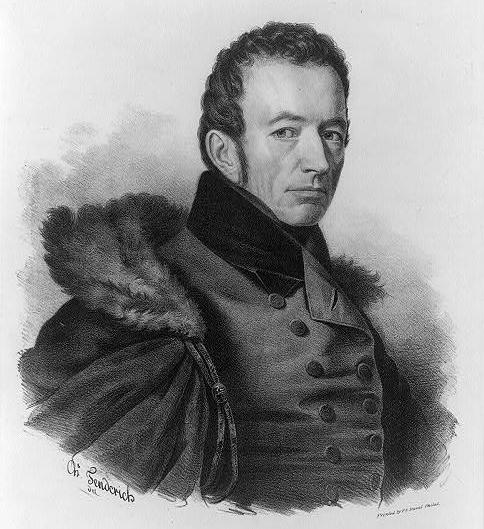
The tradition of decorating homes with Nochebuena comes from the U.S. In 1828, Joel Robert Poinsett, the first U.S. minister to Mexico, who was also a physician and amateur botanist, was impressed by its beauty and sent a few plants home.

JRP-SoW, S.jpg
Joel Robert Poinsett
Wikipedia 
But it was not until 1909, that the family of Albert Ecke began to cultivate the plant commercially in California, undertaking its controlled breeding and production. The family patented the flower under the name poinsettia. They produced plants of various colors and foliage, each of which they patented, thus controlling a virtual market monopoly into the 1990s.

In Mexico, the Aztecs used parts of the flower to create reddish purple dye for textiles and for medicine. According to the Atlas of Mexican Plants for Traditional Medicine of the National Autonomous University of Mexico (UNAM), it has many medicinal uses related to skin disorders, female ailments and inflammatory processes.

According to information from the Secretariat of Agriculture, Livestock, Rural Development, Fisheries and Food (SAGARPA), Mexico ranks fourth worldwide in cultivated area, and at least 300 hectares [741 acres] are dedicated to growing potted poinsettia plants. The main states where it is cultivated are Morelos, Michoacán, Mexico City, Puebla, State of Mexico, Jalisco, Veracruz, Querétaro, Guanajuato, Chiapas and Guerrero... Spanish original

Other Christmas posts:

Wednesday, December 16, 2015

Mexico: Urban, Middle-Class Posadas Take On Features of U.S. Culture - Anthropologist

Traditional Mexican Piñata with Seven Cones
representing Seven Deadly Sins
Today is December 16th, the first day of the Mexican tradition of Posadas—'Inns', or more specifically, the pilgrimage of Joseph and Mary asking innkeepers for shelter. Posadas mark the nine days leading up to Christmas Eve on December 24th.
At the heart of Posadas are families and neighbors who gather to commemorate Joseph's and Mary's journey to Bethlehem in order to fulfill the Roman decree and await the imminent birth of their Child. The religious core of Posadas is the novena—praying the rosary together each day for nine days, each day representing one month of Mary's pregnancy.
The festivities begin by a re-enactment of the pilgrimage. Two children dress as Mary and Joseph; others dress as angels and shepherds. Knocking at different doors, the pilgrims recite the traditional request for lodging. Twice they are ritually turned away by the person designated to be the 'innkeeper' at that door. 
At the third door, the 'innkeeper' agrees to give shelter to Mary and Joseph, and the fiesta begins. Everyone os offered atole (sweetened corn drink) and three kinds of pozole (hominy soup): red (carne-beef), white (pollo-chicken) and green (green chiles). Yes, red, white and green are the colors of the Mexican flag. 
The children then enthusiastically take part in striking a piñata. The traditional style piñata has seven cones, each marked with streamers and represent the Seven Deadly Sins (pecados): greed, gluttony, sloth, pride, envy, wrath and lust. 
Four years ago, when we'd just moved to Mexico City, I wrote a post about our experiences with Posada in Pátzcuaro, Michoacán, including the Mesoamerican roots (hint: piñatas) of this very Mexican tradition. The post ends with this comment: "Today many Posadas have lost their religious roots. We're curious to learn how they are celebrated in our new urban home, Coyoacán in Mexico City. Stay tuned!"
Our apartment is in a seven-story condominium building. To our chagrin, we have indeed learned first-hand "how posadas are celebrated in urban settings". So the title of this piece that appeared today in La Jornada newspaper immediately caught my eye. Enjoy! 
 La Jornada: Emir Olivares Alonso

The chill of the early hours of a December night are no obstacle. A good jacket is enough to take to the streets and enjoy the evening. In colonias [communities], barrios, vecindades [two names for neighborhood], and pueblos [villages], the people, particularly the smaller ones, anxiously await these nine days. Among candles, lanterns, chants, prayers, procession, buñuelos [honey-laced, cinnamon fritter], ponche [fruit punch] and, of course, the piñata "game", the neighbors celebrate the traditional posadas.

Today, particularly among the middle class [and especially in the major cities], this celebration has been diversified by abandoning traditional Mexican features and adopting such influences from U.S. culture, including ornaments with figures of Santa Claus, reindeer and snowmen; Christmas trees and twinkling lights on house façades. In some places, posadas have ceased being a celebration for children and have become adult parties with drink, food and dance.

Andrés Medina Hernández from the Institute of Anthropological Research at the National Autonomous University of Mexico [UNAM] and a specialist in the posada tradition, points out that the middle-class is "most sensitive" to U.S. cultural propaganda [Medina's word], but the cultural heritage survives in working-class neighborhoods, pueblos [villages] and indigenous communities.

Traditionally, posadas were festivities with a religious tinge. Historical data relating the early years of the Spanish Colony recount that in 1587, Brother Diego de San Soria, of the Augustinian order in charge of the Convent of San Agustín Acolman, asked Pope Sixtus V for a papal document. The Pope gave his Aval [Backing] to celebrate bonus Masses annually between December 16 and 24 in several churches.

Across the centuries, the tradition was transformed and became a popular street festival that could take place in the atriums of neighborhood churches, in streets that neighbors took over for a few hours, in the great houses of the wealthiest people, or in neighborhood plazas. But the religious element was always kept intact, with festivities beginning with the procession of pilgrims and the so-called "request for shelter", "petición de posada" [Joseph and Mary asking the innkeeper for shelter].

In recent years, however, more of a consumer element has crept in:
"The entire U.S. cultural current—part of neoliberalism—promotes individualism. The posadas are a collective celebration, but abandonment of the collective spirit is encouraged in the middle-class sectors, which have now taken on drinking and dancing. Today posadas are an excuse to party."
Piñatas

Medina Hernández explained the transformation in both form and content of the traditional piñata—a key element of posadas. About 30 years ago, they were still made of clay and resembled stars (historical documents confirm their seven peaks refer to the Seven Deadly Sins) and were filled with piñata fruits. Now, however, they are made of cardboard and represent television personalities, sports and movie starts, and they are filled with sweets and chocolates produced by the large companies.

For Medina, other circumstances in addition to U.S. trends have influenced the diversification of posadas: the growing insecurity in some parts of the country, the loss of religiosity among many sectors of the population, and urbanization based on vertical condominiums where "relations between neighbors are not always cordial."

Andrés Medina Hernández concludes:
"[Traditional] posadas have not disappeared, but they are not reported by the media. Posada and other traditions are well rooted in Mexico City's indigenous pueblos, neighborhoods and marginal areas. [They are alive and well in Mexico City] in places like Xochimilco, Iztapalapa, Tláhuac, Milpa Alta; and in such communities as Guerrero and Aragón; and in other states. That's where they are."

Tuesday, October 27, 2015

Día de los Muertos (Day of the Dead) Traditions

This morning I saw a photo on Facebook of an ofrenda (offering, altar) in the home of a thoroughly modern young Mexican friend in observance of Día de los Muertos — Day of the Dead. Her photo reminded me of the importance of Día de los Muertos throughout Mexico.

Graves in observance of Día de los Muertos in Tzurumútaro Cemetery,
outskirts of Pátzcuaro, Michoacán 


A few minutes later, I received a lovely note from a long-time, faithful follower of Jenny's blog, letting me know that she is referring first-time visitors to Mexico to Jenny's Día de los Muertos posts. It occurred to me that it might be useful to have them all in one place, so I've listed them at the bottom.

Día de los Muertos is actually a two-day celebration:
November 1 is dedicated to the souls of children who have died and to those of adults who have never married. In the predawn hours of November 2, it is believed that the spirits of all who have died are able to return to their homes, guided by the candles and burning copal (incense).
Families keep vigil through the night to welcome these souls either next to ofrendas set up in their homes, or at their graves in the cemeteries, which are bathed in candlelight. The profusion of traditional orange marigolds gives the light an unforgettable amber glow. In the background is heard the soft murmur of family members conversing quietly in quite an ordinary way. In no wise is this a sad occasion; rather, it is a profound moment for recalling Life in Death.

Día de los Muertos (Link to Page display of Posts described below)

These first three posts were written just after we  moved from Pátzcuaro, Michoacán — where we'd made our home for three years — to Mexico City. Feeling somewhat disoriented in our new urban setting and homesick for the traditions that now felt so far away, I found myself drawn to tell the story of Día de los Muertos as I had come to understand it from the Purhépecha tradition:
This highly personal post deepens the spiritual meaning of death in Purhépecha communities:
Then, last year, I came upon an article in the Mexican press that provided the long-sought answer to a key question about this powerful tradition:
Here's one describing Día de los Muertos Observances in other parts of Mexico:
Here's an excellent account of what happens in the first four years after death, grounding the tradition in 'Aztec' (Nahua) philosophy.

Saturday, November 1, 2014

Day of the Dead Altars: Symbols

Today is the first day of Día de los Muertos, Day of the Dead, a two-day commemoration of those who have died.

One year when we lived in Pátzcuaro, we traveled to a nearby pueblo to visit their panteón, cemetery. On the way, we passed a house whose street door was wide open. Inside we could see a seven-tier altar in commemoration of the grandmother, who had died that year.

Seven-Tier Family Altar Honoring the Grandmother
Photo: Reed Brundage

I've always wondered about the meaning of the seven levels, so I was pleased to come across this article in Aristegui Noticias [News]:
"If there is one tradition that unites Mexicans, it is Día de los Muertos, Day of the Dead. November 1 and 2 are two days dedicated to those who have departed. It makes no difference whether they left yesterday or a hundred years ago. The deceased return because we call them. 
"They return to enjoy what they find on the altar dedicated to them. Or they return to listen to us sing their favorite songs in the graveyards. They return, and we find them at some point, whether in the cemetery or in what was once their house, where their photographs are still displayed."
The altar is an essential component of Día de los Muertos. Altars with two levels represent Heaven and Earth. Altars with three levels represent Heaven, Purgatory and Earth. The most traditional altar has seven levels, which represent the levels the deceased must pass through in order to rest in peace.

As with most things in Mexico, there is great variation in the arrangement of the altar levels. Here's how they appear on the diagram (starting at the top):
  • Level 1: Image of Saint to whom deceased is devoted;
  • Level 2: Intended for the Souls in Purgatory and that the Deceased might have permission to leave that place;
  • Level 3: Salt is placed to purify the Spirit of the Children from Purgatory and so the body is not corrupted on the journey;
  • Level 4: Pan de muerto, Bread of the Dead, is offered as nourishment for the Souls;
  • Level 5: Food and Fruit preferred by the Deceased;
  • Level 6: Photo of the Deceased to whom the altar is dedicated;
  • Level 7: A Cross fashioned of Seeds, Fruit, Ash or Lime; serves so Deceased may expiate his or her sins.
Source: Notimex via Aristegui Noticias

Across the bottom of the diagram is a row of circles displaying the principal elements used in altars:
  • Water: Water of Life is offered to Souls of the Dead to alleviate their thirst;
  • Candles: Candles and votive lights guide Souls to their old homes and illuminate their return to their ultimate abode;
  • Cut Paper: Represents the Wind and Festive Joy;
  • Flowers: Adorn the altar ...
  • Orange petals of marigolds, cempasúchil, form the path that guides the Souls;
  • White represents the Sky;
  • Yellow represents the Earth;
  • Purple represents mourning and cleanses the place of bad spirits.
  • Figure of Dog Xoloitzcuintle [Mexican Hairless]: Allows the Spirits of Children to feel content as they arrive at the banquet;
  • Woven Bed Mat, Petate: Serves as a bed or table so the Spirits may rest; 
  • Bread of Dead, Pan de Muertos: Its circular form represents the Cycle of Life and Death; it has four appendages in the form of a Cross that symbolize the Four Cardinal Directions;
  • Sugar Skulls: Allusion to the Death that is ever-present;
  • Drinks: Deceased Spirit's favorite beverages.
Let me leave you with one more image. The altar shown below is dedicated to those who have died in the violence in Mexico. The walls are covered with white handkerchiefs on which the story of a victim's death has been stitched in red thread by a member of the group Fuentes Rojas, Red Fountains | Bordando por la Paz, Embroidering for Peace.

Photo: Fuentes Rojas Facebook Page 

Sunday, May 12, 2013

Mother's Day on Francisco Sosa Street in Coyoacán, Mexico City!

In Mexico Mother's Day is celebrated on May 10, which was Friday. Reed and I had decided to walk across Sosa Street to buy Mango Chutney to take as hostess gifts for family in California and Chicago.

We love Sosa Street. It's a narrow, one-way stone street said to be the oldest colonial street in Coyoacán, which places it in the sixteenth century.

Calle Francisco Sosa, Coyoacán

Sosa Street is lined with colonial properties. All that's visible from the street are walls, but the house where Mexico's Nobel laureate Octavio Paz, poet and writer, died is on Sosa. Today it houses the Octavio Paz Foundation, which in addition to classes and cultural events gives the public access to the property.

Colonial House where Octavio Paz died

Colonial properties are often quite grand. Behind the walls are not only large houses, but extensive gardens as well.

Formal entrance to Octavio Paz garden. 
The property extends to the right with more walkways, trees and open spaces

Half-way across Sosa is the little Plaza Santa Catarina in front of Santa Catarina Chapel, a simple sixteenth century structure originally built to hold open-air masses for Coyoacán's indigenous people.

Santa Catarina Plaza in front of the Chapel

Usually we go to the Culture Center in another colonial mansion on Plaza Santa Catarina with another extensive garden, but today we had a different destination in mind: Lupita's Restaurant.

Lupita's Restaurant (Photo: Internet)

The restaurant occupies the ground floor rooms of a corner colonial house, so the dining rooms have windows on two sides. The white-washed adobe walls and low beamed ceilings create a comfortable, very human space. The rooms are colorfully decorated with cut-paper works hanging on clotheslines strung just below the ceiling.

Lupita's menu is muy mexicano featuring family-style Mexican cuisine on a fixed price menu for 80 pesos [$6.61 USD]. We were served sopes (good) and an exceptional creamed poblano chile soup. For the main course, Reed had chicken enchiladas with mole that he pronounced delicious; I had tasty chicken tostadas—and we shared!

Dessert was just right—a tiny piece of quintessentially delicious carmelized panque (similar to pound cake). We topped it off with agua de jamaica (prepared like tea with dried hibiscus or roselle flowers)—refreshing and delicious!

But maybe the best part was the large family comida (dinner) at the table in front of us. There must have been twelve or fourteen people of all ages, including at least a couple of grandmothers. 

As we passed their table on the way in, Reed gallantly wished all the women Feliz Día de la Madre—which they loved! I saluted them with the traditional courtesy as you walk past diners,  Buen provecho (bon apetite).

Their lilting chatter, interspersed with the quick, easy laughter of people who enjoy each other enlivened our own comida. On the way out, the host at the table, probably in his mid-40's, rose deferentially to greet Reed, then asked if he's the padre (priest) at the Capilla of Santa Catarina across the street.

Reed replied with a warm smile—being mistaken for a priest, now that's a first!
"No, but we live here in Coyoacán," he replied. 
Their pleasure at hearing Reed's reply was palpable. Instantly, we were enveloped in the welcoming warmth of their smiles...smiles that reflected their pleasure in our pleasure to be living here!

I believe I heard a "¡Qué padre!"—That's fantastic!

The older woman sitting at the corner of the table next to where I was standing got up and gave me an abrazo (embrace), wishing me a Feliz Día de la Madre...to which I replied,
"Thank you for your greeting from my grandchildren." 
At which point, she said something that preceded her kissing me on the cheek! I was deeply touched.

Nothing, absolutely nothing, beats the warmth and generosity of a Mexican welcome. There's nothing quite like it...anywhere! 

Happy Mother's Day!

Sunday, February 3, 2013

Celebrations of Candlearia in Mexico City: Tamal Fair!

As I begin this post, I'm listening to the melodic song of the cenzontle (curve billed thrasher), whose arrival several days ago announced: Spring is on its way!

Another sign of spring occurred this morning at 4:00 AM when a battery of cohetes announced mañanitas (matins, morning prayers) for today's celebration of Candlearia, February 2.

Many of us know this day—Forty Days after the Birth of Jesus—as the Presentation of the Infant at the Temple in accordance with Jewish Law. But according to Spanish Wikipedia, both the Fiesta of Light and the Fiesta of Candles (Candlearia) symbolize the arrival of Jesús as the Light of the World.

Let me say yet again that Mexico never passes up an opportunity for a fiesta! Our curiosity was piqued last week when we saw huge tents being set up in the plaza next to the church in Coyoacán. But would you believe a Tamal Fair?
Note: Our dear friend Rubén once memorably took us to task for describing a single tamal as a tamale. "No," he explained, "one tamal (accent on second syllable); many tamales." Hence, Fiesta of the Tamal!
This stall offers Mexican organic coffee: "Cafe Monte Abuelo" [Mt. Grandfather]
"We care for the land of our world, the heart of our people, and the palate of our friends."
Feria del Tamal, Coyoacán
To understand, we have to take a step back to family celebrations of the Epiphany on January 6, marking the arrival of the Three Kings—Wise Men, Magicians, Astronomers—at Bethlehem to deliver gifts to the Newborn Jesus. The Rosca de Reyes (Rosca of Kings) plays a prominent role in these celebrations.
This ring-shaped sweet bread featuring bits of candied fruit and...
...a little plastic or porcelain doll representing the Baby Jesus buried in dough.
As handed down from generation to generation, the age-old tradition specifies that the person whose piece of Rosca contains the little figure must organize a fiesta for Candelaria on February 2, to which are invited friends and anyone else who shared the Rosca. The menu is specific: atole, the sweet corn drink, and tamales made with corn flour.

Given corn's dominance of the menu, it's difficult not to link this tradition to spring and to preparations for planting maíz (corn). After all, corn was originally cultivated in the river valleys of Mexico; the original peoples honored the maize god; and corn is celebrated today as the very 'heart' of Mexico. 

It's impossible to overstate how seriously this tradition is taken. For example, a monumental Rosca was placed in Mexico City's Zócalo, main square, to be shared with about 200,000 people. The Zócalo measures 240 meters (260 yards) to a side, so when I say, 'monumental', keep in mind that the Rosca was made up of:
  • 2,500 sections, 42 centimeters wide (16" wide) and 65 centimeters long (25" long); and was
  • 720 meters long (787 yards; almost eight football fields).
2013: One Segment of 787-yard long Rosca de Reyes that wound around Mexico City's Zócalo
But I digress. The point is that the traditional foods of Candlearia are atole and tamal. Reed had gone ahead to Coyoacán Centro (plaza) to pay bills at the bank. When I caught up with him, he'd already been standing in two long bank lines, so we looked for a bench to sit down and rest.

We'd been sitting and people-watching for just a few minutes when we noticed an elderly gentleman purposefully making his way toward our bench. We moved over to make room for him and invited him to sit. He greeted us in halting English, asked if we're German, and if we speak English.

Our chat with him was delightful. He is eighty-eight years old and was born in Colonia Roma, a neighborhood closer to Mexico City's historic district. Then he added,
"When I was a boy, there was marsh between Mexico City and Coyoacán...."
"...like Xochimilco today," Reed interjected. 
"Yes," the gentleman smiled, "just like Xochimilco today. And Coyoacán was nothing; it was just a little pueblo at the outskirts of Mexico City."
Then he asked if we were going to the Feria. When we replied, certainly, we're just resting before going inside, he became quite animated in telling us about the tamales offered in Stall 29:
"They are delicious, the best here," he observed before saying goodbye and heading inside. 
A few minutes later, we made our way inside the long, white tent that housed the vendors' stalls.
2013 Feria del Tamal, Coyoacán, Mexico City
One of the three tents devoted to vendors' stalls!
We slowly made our way among the other customers gazing at the offerings.
Vendors' Stalls
Tamales from Oaxaca and Chiapas are wrapped in banana leaves, rather than in corn stalks like those shown below.
Tamales Wrapped in Corn Stalks
Each stall attractively displayed their offerings. Atole was served in ceramic cups, which were included in the price!
Atole was served in cups like the roundish reddish-brown cup
to the right of the plate of Costeño (Coastal) Tamales Wrapped in Banana Leaves (Green)
After we'd been walking around for a few minutes, Reed asked,
"How does anyone know which stall to choose?"
On cue, our gentleman re-appeared, holding a business card on which the number 29 had been written in pencil.
"This stall has absolutely the best tamales at the Fair; I have been their friend and customer for twenty years," he assured us.
Touched by his kindness, we thanked him and wished him "Buen provecho" (literally, "Good benefit" or more loosely, "Enjoy your meal"), which is the traditional, courteous greeting offered to diners. As he walked away, I noticed that he was carrying a white plastic bag with two quart-size Styrofoam containers. He and his family will indeed enjoy 'Good Benefit' from their annual meal of their favorite tamales!

We walked on...observing that stalls were offering not only tamales, but other products like organic coffee from Chiapas, cheeses, and bee products (honey, beeswax, and medicinals like propóleo, which is harvested directly from beehives and processed into a variety of products):
This stall offers Sweet Tamales, Cheeses, Sweet Breads, etc.
Seeing the propóleo reminds me that the tradition of native healers is quite strong in Mexico, where the land's biodiversity lends itself to a wide variety of plants with healing properties. But that's another post for another day....

The diversity of products offered in the stalls remind us again of Mexico's powerful market tradition, whose roots reach back deep into Mexico's rich cultural past...yet another post....

Coyoacán's Feria de Tamal is a four-day affair: January 30 to February 3. The fair, associated with Candlearia, brings to a close the annual celebrations of Christmas, New Year, Three Kings Day and the Presentation of Jesus at the Temple.

What's next? Stay tuned....

Still Curious?

Thursday, November 1, 2012

Mexico's Día de los Muertos (Day of the Dead) Blends Indigenous, Spanish Traditions

Paying respects on November 1 at the Panteón (Cemetery) 
with flowers and other offerings, Mixquic, Mexico City
Photo: Elizabeth Ruíz/Cuartoscuro
Last night I reread Jenny's previous Día de los Muertos (Day of the Dead) posts. I didn't see how I could improve on them. Their descriptions of the roots of the annual celebration deep in the soil of the Mesoamerican cosmovision is compelling.
But this morning I came upon this article in Milenio, a Mexican newspaper. I've translated it for Jenny's English-language readers. Links to the three original Jenny's posts are provided in Still Curious? (scroll down).
Sand painting for Día de los Muertos in Oaxaca. Photo: Internet

Milenio: November 1, Mexico • The legacy of the pre-Hispanic Mesoamerican and Catholic traditions converge in Mexico on the Day of the Dead, a festival of the dead, whose rituals are authentic living testimony to this cultural fusion.

In an interview, Andrés Merino, a member of the Institute of Anthropological Research National Autonomous University of Mexico (UNAM), observed:
"The origins of the celebration of the Day of the Dead in Mexico predate the arrival of the Spanish (...), but are fused with the medieval Catholic tradition."
Original peoples in South Central Mexico and North Central America (Mesoamerica) are characterized as having "very elaborate forms of spirituality" linked to the harvest and structured around a cycle of four celebrations culminating with the "harvest festival" or "festival of the dead". Merino added:
"The dead play an important role in the entire agricultural cycle, their support is requested at critical moments, such as for arrival of the rains for growing corn. (...) They are the intermediaries with the gods of rain."
The festivities were presided over by the goddess Mictecacíhuatl, known as "Lady Death" (currently related to "Catrina", character created by the graphic artist José Guadalupe Posada [and made popular by Diego Rivera]) and her husband Mictlantecuhtli, Lord of Land of the Dead.

With the arrival of the Spanish, the harvest tradition was merged with Catholic medieval customs and modifications appeared in the preparation of offerings and altars—the ones seen today reflect this cultural fusion (syncreticism).
"The offerings are great symbolic, artistic expressions. There is an order in the way they are represented, and it is here where this tradition of combining the cultures appears," he said.
The Catholic Hispanic legacy is seen, for example, in the pan de muerto [bread of the dead], made with wheat flour [introduced by the Spanish], eggs, sugar and anise; in the placement of fruits and flowers not native to the region [also introduced by the Spanish] on altars, and in the use of candles and Christian concepts, such as "souls" to refer to the dead who return this one night in the year.

Family Altar, Pátzcuaro, Michoacán, to honor the Grandmother, who had died in the past year. Photo: Reed Brundage
The Mesoamerican origins, meanwhile, appear in the design of the altars that reproduce the cosmovisión ("worldview") unique to these cultures. The altars represent: the
  • Underworld, where incensarios (censers burning copal) are placed; the 
  • Midpoint [earthly level], where offerings [bread, fruit, water, salt, tequila, cerveza] are placed; and the 
  • Upper level [heavens], with images and photographs of the dead.
The altars, characterized in most cases by their bright colors, are complete with copal incense and sweet drinks fermented from corn, chocolate, typical dishes like pumpkin or sweet tamales, and it is customary to place the names of the deceased with their photographs.
"Here, what appears is a celebration of Life, there is a joy in being connected with the dead. (...) I believe that it is the end of a human cycle that is lived with great joy," observed the expert.
During this celebration, in addition to going to the cemeteries, children often go out on the streets to sing praises and ask offerings on behalf of the dead, with a chilacayote (a fruit similar to pumpkin) with a candle inside. Merina believes this custom can confuse Day of the Dead with Halloween, a festival of Nordic tradition, which has been introduced into Mexican culture through the influence of television and the supermarkets.
"The Halloween influence has to do with the middle class that goes to the supermarkets, which reflect the influence of U.S. television. (...) But this is not the tradition in the traditional communities," he added.
In 2003 UNESCO declared The Day of the Dead to be an Intangible Heritage of Humanity. The celebration lasts for two days: November 1 is dedicated to the souls of children who have died and adults who have never married. In the predawn hours of that last day (November 2), Mexicans keep vigil in cemeteries for all their dead.

Still Curious?

Sensitive photos of Día de los Muertos vigils on Janitzio Island (Pátzcuaro, Michoacán) convey their beauty and simplicity, followed by photos of altars prepared in Oaxaca.

Related Jenny's Posts:
Report of traditional Día de los Muertos customs in Andrés Mixquic a pueblo-mágico in the Delegación (Borough) of Tláhuac, Mexico City (Spanish only), and how they are slowly, sadly, changing.

Tuesday, December 27, 2011

Holiday Traditions Criss-Cross the Border

From ancient times, international trade has been the mechanism for spreading the practical products of culture—foods (spices, sugar, tea, coffee, chiles, potatoes, rice, wheat, tomatoes...), plant products (cotton, silk, wool...). The list is seemingly endless.

But the international traders often brought home more than products...sometimes they also brought home ideas and cultural practices. Modern technology has simply amplified these traditional effects.

Navidad Blanca (White Christmas)

So it is that Mexico City this year proclaimed a Navidad Blanca. Some Christmas Trees were available when we lived in Pátzcuaro, but they sell briskly in Mexico City. Mexicans tend to prefer the taller Christmas Trees imported from the U.S. and Canada. This year over a million were imported and sold.

Locally-grown, Mexican trees are smaller, greener, softer, but they often go unsold. The issue has become controversial, politically charged.

In Mexico City's Zócalo, the giant plaza bounded by the Cathedral and National Palace (seat of the Mexican government), a giant artificial Christmas Tree has been set up—perhaps to avoid getting embroiled in the controversy, which was even debated in the Mexican Senate.

0
In the background is the Cathedral (left) and the National Palace (right). 
To complete the scene, a highly popular ice-skating rink has also been installed. You might excuse this newcomer for thinking...New York City's Rockefeller Center!

A giant ice-skating rink rests in front of the Christmas Tree; the Cathedral is in the background.
But this is, after all, Mexico!  So at night there is always an abundance of fireworks!

Fireworks display in the Zócalo (Mexico City)


Cultural Fusion at la frontera

This cultural fusion is probably most evident at la frontera (the border), an arbitrary line quite literally drawn in the sand. At the conclusion of the Mexican-American War, the U.S. and Mexican governments established a joint survey commission that sent surveyors from both countries to determine the location of the border—the legal, international boundary that would delineate land the U.S. was 'annexing' from Mexico.

No less a respected authority than George Friedman (founder of the Stratfor Report, which objectively applies a geopolitical perspective to global intelligence issues) lays out the geographic and cultural reality:  Northern Mexico and the Southwest United States are a single geographic unit whose culture reflects and sustains its Spanish-Mexican heritage.

Nowhere is this more evident than in the border towns—El Paso, Texas/Ciudad Juarez, Mexico; Brownsville, Texas/Matamoros, Mexico; Laredo, Texas-Nuevo Laredo, Mexico; McAllen, Texas/Reynosa, Mexico; San Diego, California/Tijuana, Mexico. Nogales literally straddles the border—part in Arizona, part in Mexico.

Until recently, the border was a mere formality that did not affect the life of these vibrant border communities. Residents shopped on both sides of the border, nor was it uncommon for large, extended families to have members living on both sides.

Reed came upon a somewhat rambling but nonetheless interesting article on the mixing of Mexican and U.S. holiday traditions—and commerce! The piece was published in Frontera NorteSur—a journalism project of the University of New Mexico in Las Cruces, NM, located about 30 miles from El Paso, TX/Ciudad Juarez.

The piece focuses around the Mercado Mayapan, which was founded by former garment workers who banded together to promote grassroots economic development. The Mercado Mayapan is a place where residents and visitors can shop for fair trade-oriented holiday gifts while reaffirming traditional culture. “It’s not about the consumerist aspect,” a spokeswoman said, “It’s more about the get-together”—fiestas!

To celebrate Navidad, the Mercado sponsored mariachi bands, a traditional posada, and a giant piñata for children of all ages!   

The Mercado is also reviving another tradition that counters today's rampant commercialism. On the morning of the Posada, Orozco and several friends did a trial run of a tianguis (exchange by barter), which they'd like to hold on a regular basis. For their first tianguis, market friends traded body care products and natural foods including oatmeal, fresh mint and chiles curtidos (chiles in vinegar).

Holiday Traditions Straddle the Border

From here, the piece broadens out to include various holiday customs celebrated on both sides of the border.  In Puerto Vallarta, for example, restaurants feature traditional Thanksgiving dinners to their large U.S. and Canadian expat community, tourists and, tellingly, Mexican nationals as well.  

Other holidays have become transcultural, including Día de los Muertos (Day of the Dead) and Halloween, where Mexican skulls (calaveras), notably la Catrina, are showing up in the U.S., and young people south of the border are dressing up in ghoulish Halloween costumes. For our part, Reed and I were startled to see carved pumpkins (jack o'lanterns) adorning a grave in a Pátzcuaro panteón (graveyard)! 

One unfortunate byproduct is the extension of Black Friday into Mexico. In November Mexico City sponsored a 'Good Weekend'—the Mexican version of the famed (or, infamous, depending on your point of view) U.S. discount day.  

The piece wraps up with a lovely anecdote. An older woman, Lydia Zavala, has brought her great-niece to the Mercado Mayapan to shop for jewelry and a CD. Asked why she chose the Mercado, Zavala replied, “It’s handmade, and we’re supporting these artisans as opposed to supporting corporate America,” Zavala said. “This is the only place in El Paso that celebrates the Mexican traditions well…we need to keep it alive. We need to keep all these traditions alive.”

The reality is more complicated, but what is abundantly clear is the transcultural ambiance of these border towns. Since 1550 B.C. when the first Phoenician traders set forth in their galleys hugging the coasts of the Mediterranean Sea, through the Age of Exploration...and Trade, up to today's gigantic container ships, the peoples and the cultures of the world have been exchanging products and ideas.

We are all enriched by this millenniums-old tradition of trade and cultural exchange.  Enjoy!

Still Curious?
 
If you'd like to read the original article, here's the link: http://fnsnews.nmsu.edu/2011/12/20/contesting-and-reclaiming-the-holidays/

Thursday, December 15, 2011

Mexican Traditions: Las Posadas

Today is December 16th, the first day of the Mexican tradition of Posadas ('Inns'), which mark the nine days leading up to Christmas Eve on December 24th.

At the heart of Posadas are families and neighbors who gather to commemorate Joseph's and Mary's journey to Bethlehem in order to fulfill the Roman decree and await the imminent birth of their Child. The religious core of Posadas is the novena—praying the rosary together each day for nine days, each day representing one month of Mary's pregnancy.

We first experienced Posadas in Pátzcuaro, Michoacán, where each barrio (neighborhood) holds its Posada on a different night. The first one we attended was hosted by the swimming school where we swam three times a week.

Driving up to the school, we were startled to see a bonfire (fogata) blazing away right in the middle of the street.  ¡Es México!  Students and their families sat on chairs set up around the fire, chatting quietly and watching the flames dance.

After saying the rosary together as a group, there was some brief confusion, then the pilgrimage began. Two children were dressed as Mary and Joseph; others were dressed as angels and shepherds.

Knocking at the school's different doors, the pilgrims recited the traditional request for lodging. Twice they were ritually turned away by the person designated to be the 'innkeeper' at that door.

Mexican newspaper, Milenio, posted this charming
watercolor of Pilgrims Seeking Shelter at the Inn

At the third door, the 'innkeeper' agreed to give shelter to Mary and Joseph, and the fiesta began. Everyone was offered atole (sweetened corn drink) and three kinds of pozole (hominy soup—Reed's favorite!): red (carne-beef), white (pollo-chicken) and green (green chiles). Yes, red, white and green are the colors of the Mexican flag.

The children engaged enthusiastically in striking a piñata. The traditional style piñata has seven points, each marked with streamers. The cones represent the Seven Deadly Sins (pecados): greed, gluttony, sloth, pride, envy, wrath and lust.

Traditional Piñatas:
Seven Cones Symbolize Seven Deadly Sins

Blindfolded and dizzy from being spun around, each child in turn (personifying 'blind faith') hits at the piñata with a big stick symbolizing virtue. When the piñata yield at last to the children's 'virtuous' blows of 'blind faith', dulces (sweets) and fruit fall to the ground. These fruits and candies (manna) represent God's grace freely given when faith triumphs over sin.

We were also blessed to enjoy a Posada at the home of a Mexican friend. Their house is on a dead end street, which had been closed off for the night. So we got out of the cab and walked up. As we walked, we passed perhaps three or four small fogatas (campfires) in the street. Around each fire, a small family group sat chatting quietly.

When we arrived at the house, our host family had almost finished saying the rosary together, led by a woman from the church. Everyone was served the traditional atole and posole. Also traditional is ponche, a sweet punch prepared from seasonal fruits (Mexican hawthorn berries, tamarind, apple, sugar cane, guayaba).

After a time, the pilgrims arrived singing at the front door, carrying candles and bearing a nacimiento (creche). Once again, children dressed as Mary and Joseph were accompanied by others dressed as angels and shepherds and, again, the litany was repeated: Joseph's ritual plea for a place to stay, and the host's ritual refusal.

At a spiritual level, the question posed by Posadas has been phrased as, "Are we willing to give shelter within our own hearts to the Coming of the Light of the World?"

At the end of the evening, the children were given a small basket (aguinaldo) filled with peanuts and small sweets. In this context, the aguinaldo is said to symbolize the giving of communion.

Origins of Posadas

Like just about everything else in Mexico, this 424-year old tradition has a long, rich and complex history, beginning with the birthday celebration of Huitzilopochtli, the Aztec sun god, whose birthday falls at the time of the Winter Solstice (December 21).

The birth of the sun god marks the year's shortest day and longest night, when the sun is poised to return, thus again lengthening the days. The birth of Jesus, Light of the World, has similarly been set at this time of longest night, when all is darkest, just before the sun begins its return journey to the north.

Immediately after the Conquest, Cortés petitioned the Spanish king to send monks to evangelize the indigenous peoples. In response, the king sent Franciscan Friars, whose methods were creatively adaptive. Wherever possible, the Friars sought to replace Mesoamerican fiestas with celebrations tied to the liturgical calendar. One such substitution occurred around the birthday celebration of Huitzilopochtli.

Curiously, Mesoamerican traditions included something similar to the piñata. To celebrate the birthday of the Aztec Huitzilopochtli (sun god) at year's end, priests placed a clay pot on a pole in the temple. Colorful feathers adorned the richly decorated pot, filled with tiny treasures. When broken with a stick or club, the treasures fell to the feet of the god's image as an offering.

The Mayans played a game where the player’s eyes were covered while hitting a clay pot suspended by string. The missionaries ingeniously transformed these games for religious instruction. They covered the traditional pot with colored paper, giving it an extraordinary, even an attractive, appearance intended to represent Satan, who tempts the weak.

In 1587, nearly seventy years after the arrival of the Spanish, Fray Diego de Soria celebrated masses that he called 'de aguinaldo' (gratitude or gift given at year's end; in Mexico, the Christmas propina—'bonus'—given to workers is called el aguinaldo).  

Indigenous peoples were not accustomed to being inside buildings, so Fray Diego held his masses in the Atrio (courtyard) of the church for the nine days (December 16-24) before Christmas. The masses featured scenes from the Birth of Jesus.

In the eighteenth century, celebrations of Posadas slowly migrated from the church to the barrios (neighborhoods) and casas (family houses). Over time, popular songs replaced religious music.

Posadas are celebrated throughout the Republic of Mexico—each region contributing its own unique cultural variations—and in Guatemala. Posadas are also celebrated throughout Latin America, as well as within strong Mexican communities in the United States.

Today many Posadas have lost their religious roots. We're curious to learn how they are celebrated in our new urban home, Coyoacán in Mexico City.

Other Christmas posts:

Tuesday, December 13, 2011

Fiesta de la Virgen de Guadalupe

Yesterday was the fiesta of the Virgin of Guadalupe. The primary celebration is held at the Basilica of the Virgin of Guadalupe in Mexico City. Hundreds of thousands, if not millions, of the faithful made pilgrimages to celebrate her day.

The Virgin appears to Juan Diego
In an earlier post, I wrote about the Virgin of Guadalupe and the historical context of her appearance to the Nahuatl peasant, Juan Diego, canonized in the twentieth century as the first American saint.

Even if you don't speak Spanish, this CNN piece nonetheless conveys the sights and sounds that greeted the faithful arriving at the Basílica.

Large crowds are no longer in my repertoire, so we looked for ways closer to home to honor her day. When I observed to our taxi driver that today is the fiesta of the Virgin of Guadalupe, he brightened visibly at my words before proudly replying, "Yes, today is the day we celebrate being Mexicans."

Yet again, I was struck by the power of having something I've read come to life right in front of me. The taxi driver gave voice to a deep truth of Mexican culture: the appearance of the Virgin of Guadalupe has served to unite all the peoples of Mexico like no other event in Mexican history. We heard similar comments in Michoacán, but hearing it for the first time here in the highly urbanized environment that is Mexico City was somehow different—a different facet of a complex cultural reality.

Celebrations of the Independence from Spain and the Revolution are political in nature, but the Fiesta de la Virgen de Guadalupe is something else entirely. Deeply grounded in ethnicity, it symbolizes this Mother's love for all the people, el pueblo, who inhabit Mexican soil.

The Lady's Words

Here is an English translation of a segment of the words traditionally ascribed to the Lady [emphasis added]:
"Know and understand well, you, the most humble of my sons, that I am the ever virgin Holy Mary, Mother of the True God for whom we live, of the Creator of all things, Lord of heaven and the earth. I wish that a temple be erected here quickly, so I may therein exhibit and give all my love, compassion, help, and protection, because I am your merciful mother, to you, and to all the inhabitants on this land and all the rest who love me, invoke and confide in me; listen there to their lamentations, and remedy all their miseries, afflictions and sorrows." [emphasis added]
Initial Impact

At the time, the story of the brown-skinned Lady who spoke in Nahuatl to a common peasant spread quickly through the indigenous communities. The effect was to reassure the original peoples who continued to suffer through the effects of their defeat. Their reassurance derived in large measure from where the Lady appeared: that is, on the Hill of Tepeyac, site of a temple to Tonantzin that was destroyed by Cortés.

Tonantzín was a manifestation of Coatlicue, the earth goddess who both gave and determined the length of life. Juan Diego's vision of the Lady is credited with being a major factor in the conversion of many indigenous to the Catholic faith; in fact, many called her Tonantzin until the Church gave her one name, Guadalupe.

Mestizos—offspring of  Spanish and indigenous unions—embraced the Virgin of Guadalupe as their source of dignity and respect in a colonial environment that gave them neither.

Impact Over Time

Over time, the criollos—Spanish born on Mexican soil, rather than in Spain—came to embrace the Virgin. Although criollos had economic rights, they were denied political power by the Spanish king, they were hence unable to hold any public office. With their embrace of the Virgin of Guadalupe, the criollos reasoned that the Virgin Mary's appearance on the soil of Nueva España legitimized their birthplace and hence their claim to political power.

In 1810, Father Miguel Hidalgo led a peasant rebellion against Spain carrying the banner of the Virgin of Guadalupe. Though crushed, Hidalgo's uprising is credited with being the beginning of Mexico's War for Independence from Spain.

December 12, 2011

This second CNN clip focuses on the reasons people give for coming to the Basílica.

A simple song sung by two women has these words: Guadalupana (the Virgin), era Mexicana (was Mexican) and una hermosa mañana la Guadalupana bajó al Tepeyac (one beautiful morning, the Guadalupana came down the Hill of Tepeyac).

Several pilgrims then speak:
The young woman says she has visited the Virgin of Guadalupe since she was a child; she has afflictions, and the Virgin has helped her. 
The woman praying the rosary is asking for world peace, that people's needs be met, and that those confronting storms in their lives receive the Virgin of Guadalupe's intercession. 
The young man says he is there to demonstrate his faith for going forward in his life.
One of the singers describes the Virgin de Guadalupe:
"She was brown-skinned (morenita); nearly all of us Mexicans are brown-skinned. We are proud of her because she is humble. She protects all the people; she protects the children."
Little, Brown-skinned Virgin 

This fiesta introduced us to two new names for the Virgin of Guadalupe. Each uses the diminutive form much used by Mexicans.  The first is la Virgencita (the Little Virgin); the other is la Morenita (the little brown-skinned one).

How better to sum up the place that the Virgin of Guadalupe, Mother of Mexico, occupies in the hearts and souls of Mexicans than with these affectionately familiar names, la Virgencita and la Morenita?

Monday, August 22, 2011

Mesoamerican Culture: The Human Bond with Nature

Waking at sunrise one morning, I walked into the front room to check on the volcanoes Iztaccíhuatl and Popocatéptl. Checking the volcanoes has become my new morning ritual — akin to checking to see whether Mt. Rainier was 'out' when I lived in Seattle. On this day my curiosity was rewarded by seeing their outlines etched against the early morning sky.

Iztaccíhuatl (Sleeping Woman) reclines at the left. Her head nearly touches the left margin. A dip under her chin is followed by her breasts and folded arms, then her knees and finally her feet sticking up. Beyond her feet is a long, low ridge linking her to her warrior-suitor Popocatéptl (Smoking Mountain) at the right. At 17,167 ft. Iztaccíhuatl is the third highest mountain in Mexico. Popocatéptl's Sulphur plume is colored pink against the early morning light.

Here's a close up of Popocatéptl, don Gregorio, don Goyo.  

Standing guard over Iztaccihuatl is her unrequited lover, snow-capped Popocatéptl (Smoking Mountain) in all his glory! At 17,800 ft., Popocatéptl is the second highest mountain in Mexico and rises about 10,000 ft. above the Valley of Mexico (altitude: 7,000 ft.).  Photo courtesy of Reed

Like other agricultural peoples around the world, Mesoamerican culture regarded man as inextricably linked to the land, Mother Earth, and to the naturaleza (natural world). The geography of Mexico is such that early peoples were subjected to earthquakes, volcanic eruptions, hurricanes from the East (Caribbean) and cyclones from the West (Pacific Ocean), floods and drought.

It is little wonder, then, that vulnerability to the vicissitudes of nature gave rise to and reinforced a profound dependency on the seasonal arrival of las lluvias (the rains) to assure the corn crop. A widely-repeated dicho (saying) captures this traditional wisdom:
Sin maís no hay país (Without corn there is no country).
A short walk around the corner from our apartment yielded yet another discovery. Growing in a protected space in the middle of Escocia [Scotland] Street is a specimen of the national tree of Mexico, the Montezuma Cypress (Taxodium mucronatum).

This Montezuma Cypress grows practically in front of our neighborhood Tiendita de Abarrotes (Grocery Store).

The Montezuma Cypress occupies a unique place in Mexican cultural consciousness. These words, written recently to introduce a paper discussing Mexico's national tree, capture not only its symbolism, but its emotional power as well:

"Old Man of the Water...what would our country and our culture be without you; endearingly Mexican [emphasis in the original], you bury your roots in the depths of the soil in order to extract from it the vital essence that gives you life." 

The phrase 'vital essence' refers to the Mesoamerican concept of the Life-Force, believed to give life's energy not only to the natural world but to the seres humanos (human beings) who are its inhabitants. It is believed that water carries this Life-Force, as epitomized in this traditional dicho (saying):
El agua es vida  (Water is life).
In Mesoamerican culture, work was traditionally regarded with pleasure, even considered to be a privilege, because it enabled human beings to maintain a harmonious relationship with the land and with the natural world. A Purhépecha friend, relating stories of her childhood spent helping her father in their fields, expressed this pleasure when she observed,
"Those days in the fields were fiesta days; we were always exploring something."
Today, the Montezuma Cypress is harvested and used for wood beams and furniture, among other uses. Based on the testimony of my friend, it is reasonable to believe that today's artisan woodworkers maintain this ancient connection. Contemporary legends about how artisans approach their work support this view.

Water was sacred in the Mesoamerican cosmology; it was believed to carry the Life-Force to the natural world — plants, animals and man. Cypress trees generally require a lot of water; many times they grow in swamps.  But because of its adaptability to many of Mexico's different ecosystems, the Montezuma Cypress is found throughout Mexico — from sea level in Montemorelos, Nuevo León, to Mexico City at 7,000 ft.

The sacred role of water in the Mesoamerican cosmology draws our attention to the writer's use of the nahuatl (language of the Aztecs) word ahuehuete, which translates as 'Old Man of the Water'. It is probably not too much of a stretch to imagine that 'Old Man' is a veiled reference to the ancient water god. In any event, the writer's reference to it demonstrates the value accorded to the ancient meaning by contemporary Mexican cultural sensibility.

The Tule Tree is named for the town where it grows, Santa Maria de Tule, Oaxaca; it is probably the most famous Montezuma Cypress. Scientists estimate that it is more than 2,000 years old. With a diameter of 37.5 ft, 35 people holding hands can barely encircle it. It is said that five hundred people can be sheltered in the shade provided by the canopy of the Tule Tree.

Here is the classic photograph of the Tule Tree. With a 14-meter diameter and a circumference of more than 45 meters, encircling the leafy juniper requires more than 30 people holding hands, as shown in the image.


With the sacred ceiba tree (Tree of Life in Maya cosmology), the ahuehuete is an element of the natural world inextricably linked to Mexican culture stretching from prehispanic to modern times.

To the Aztecs, the combined shade of an āhuēhuētl (Montezuma Cypress) and a pōchōtl (Ceiba pentandra) metaphorically represented a ruler's authority. As a demonstration of the power and presence of government, the Aztecs planted Montezuma Cypress trees along important avenues traveled by their kings.

These magnificent trees are not uncommon in our new neighborhood of Coyoacán (Mexico City). Whenever we come upon one, we smile at each other — mutual recognition of the irrepressible vitality of the Life-Force.